Your Journey Back to Yourself Starts Here
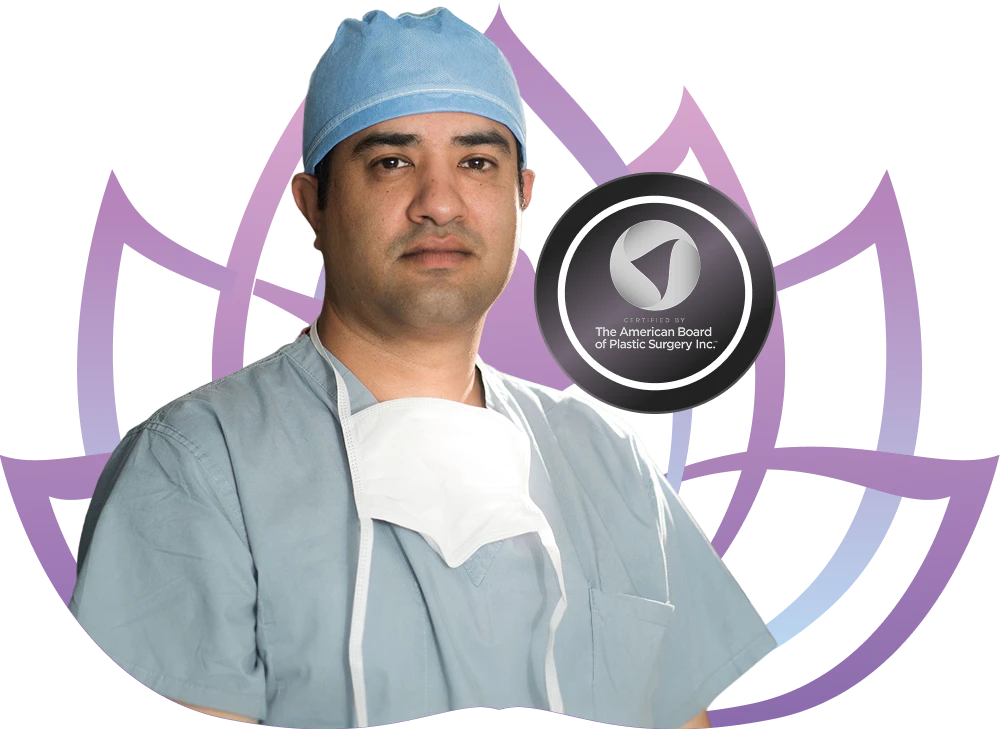
Dr. Ravi Tandon is certified by the American Board of Plastic Surgery, a distinction that requires a plastic surgeon to pass rigorous exams and complete advanced training that extends beyond what’s expected for medical licensure. He’s a prime choice for quality, considerate, and natural-looking reconstruction.
Our plastic surgeon in Manhattan, NY, stays up to date with the latest developments in the field of reconstruction. He offers many flap techniques based on his patients’ preferences and is fellowship-trained in complex reconstructive microsurgery, so he can assist with resensation in many cases.
Dr. Tandon is invested in helping women who are preparing for, have recently completed, or have long since completed a mastectomy feel like themselves again. He understands the deeply personal nature of every patient’s journey, and can help guide you through this part of yours.
If you underwent a mastectomy or double mastectomy, you may feel as though you’re missing an important part of yourself and your femininity. Dr. Ravi Tandon offers advanced reconstructive options for Manhattan patients who wish to feel whole once again.
We know the process can feel overwhelming, but Dr. Tandon and our team will explain your options, work hand-in-hand with your care provider, and develop a custom surgical plan that considers your preferences and cancer treatment timeline. Together, we can help you feel more like your former self.
Under the Women's Health and Cancer Act of 1998, all stages of breast reconstruction (mastectomy, reconstruction, and prostheses) are typically covered by health insurance. Breast reconstruction is also covered under Medicare. This applies whether reconstruction is done immediately or years later.
If you’re uninsured or have out-of-pocket costs, our Manhattan team can explore financing options with you to make the cost of your care more manageable.
Most women who have had or are planning to have a mastectomy are candidates for breast reconstruction. The bigger question isn't if you can have it. It's which approach is right for you and when. To determine this, your Manhattan reconstructive surgeon will consider your:
A consultation with our board-certified plastic surgeon in Manhattan is the best way to learn what's possible for you.
If you didn’t undergo a nipple-sparing mastectomy, Dr. Tandon also has options to reconstruct your nipples:
No, but it's worth having the conversation early. Meeting with our reconstructive surgeon before your mastectomy allows your surgical team to coordinate and gives you more options, including immediate reconstruction (done at the same time as the mastectomy). That said, delayed reconstruction is equally valid and produces excellent results.
The DIEP (Deep Inferior Epigastric Perforator) flap is often considered the gold standard of natural tissue breast reconstruction. It uses skin and fat from the lower abdomen while leaving the underlying muscle completely intact. The result is a reconstructed breast made entirely from your own tissue, and an easier recovery than methods that use abdominal muscle tissue.
No, reconstruction does not prevent or interfere with follow-up imaging, including mammograms and MRIs. Your oncology team and reconstructive surgeon will communicate to ensure your monitoring schedule stays on track.
Yes, though radiation does affect your options. Radiation can reduce skin elasticity and increase the risk of complications with implants, which is why surgeons often recommend flap-based reconstruction for patients who will undergo radiation.
Locations
We have 2 locations to visit us at.